

Sure, you could get a compass or ruler and a pencil and draw the seam allowances on. But who wants to take the time to do that? This hack shows you an easy way to add seam allowances to a sewing pattern as you cut your pattern pieces out of fabric. The secret is magnets!

When I draft my own sewing patterns, I usually work without the seam allowance and then add it as I am cutting the fabric. It simplifies the math involved in drafting, especially if I’m tracing existing clothing to make sewing patterns. It also makes it easy to use a different seam allowance based on the type of fabric I’m using.

So I stick some neodymium coin magnets right to the blade of my scissors. Then, I cut out the fabric by following the edge of the pattern with the edge of the magnets. This way, the seam allowances are automatically added as I cut! I just choose the number of magnets that matches my desired width of seam allowance. (By the way, as an Amazon affiliate, I earn from qualifying purchases.)
Cut the fabric with the part of the scissor blade that’s right next to the magnets. And take fairly short cuts, so that you can make sure you’re keeping the edge of the magnets aligned.

Usually using one magnet plus a metal bobbin is an easy way to add just the right seam allowance width. But your style of bobbins may be different than mine, so always check with a seam gauge or ruler.
The really great thing about this method is that it allows you to choose YOUR favorite width of seam allowance. And then change it freely and easily whenever you make the pattern out of a different fabric.

DIYMAG Small Rare Earth Magnets, 40 Pack, 5 Sizes – Neodymium Magnets for Refrigerator, DIY, Crafts, Kitchen & Office
- 【5 Different Size】40pcs, 5-Size Small Magnets: Strength Grows with Size. Perfect for Precision Tasks. Take Anywhere
List Price :
Offer: 7.99 $
Go to AmazonHow much seam allowance should you add to a sewing pattern?
How do you know what width of seam allowance to use? A 5/8″ seam allowance is considered fairly standard for woven fabric, and 1/4″ is very common for knit fabrics. But as long as you are adding a consistent amount when you cut and when you sew, then it’s okay to choose a custom width.
I pick a width of seam allowance based on the fabric that I’m using. If the fabric ravels easily, I use a wider seam allowance. And if I’m using a tightly woven, knit, stabilized, or laminated fabric, then I can decrease the seam allowance. I actually prefer a 1/2″ seam allowance for most of my projects.
If you have curved seam allowances on your project, they will need to be trimmed or notched anyway. So this is one reason to start with a narrower seam allowance. But be sure not to cut it too close, or else your seam allowances will fray into nothing and your project will fall apart!
Use this sewing hack to cut perfectly even strips of fabric, too!
You can also use this trick to cut perfectly even strips of fabric with scissors. Fabric strips are great for quilt blocks, or making striped tote bag handles. You can also use them to make your own sunhat out of twisted strips of fabric!
Sure, you can use a rotary cutter (I usually do), or tear a thin woven fabric into strips. But tearing doesn’t work well for knits or thicker fabrics. To make a wide strip, just use one magnet to stick a metal object of the correct width to your scissors.
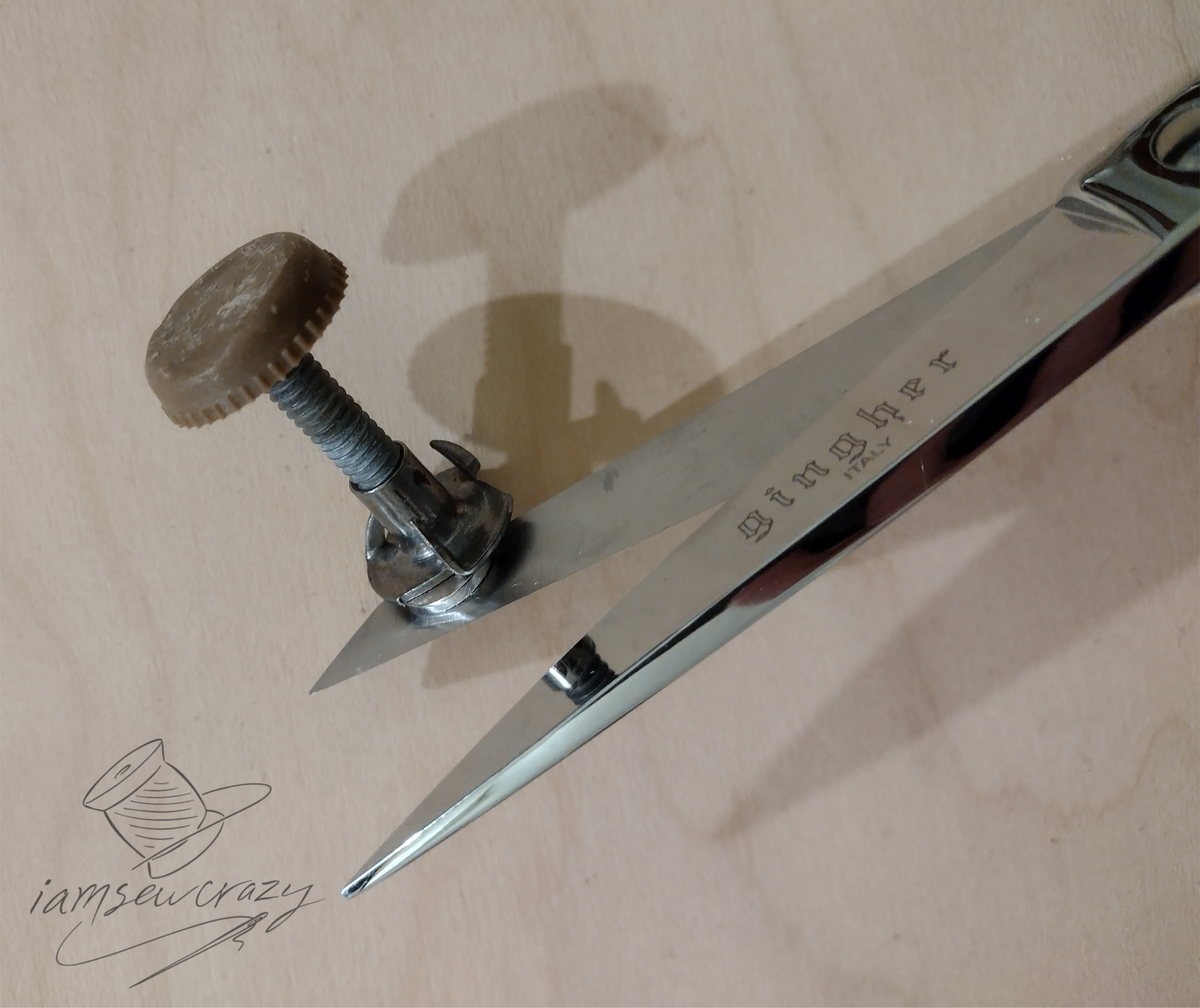
Here, I’m using parts from an adjustable foot that I swiped from a piece of furniture. The foot creates a guide that helps me cut strips to just the right width.
Other uses for magnets in the sewing room:
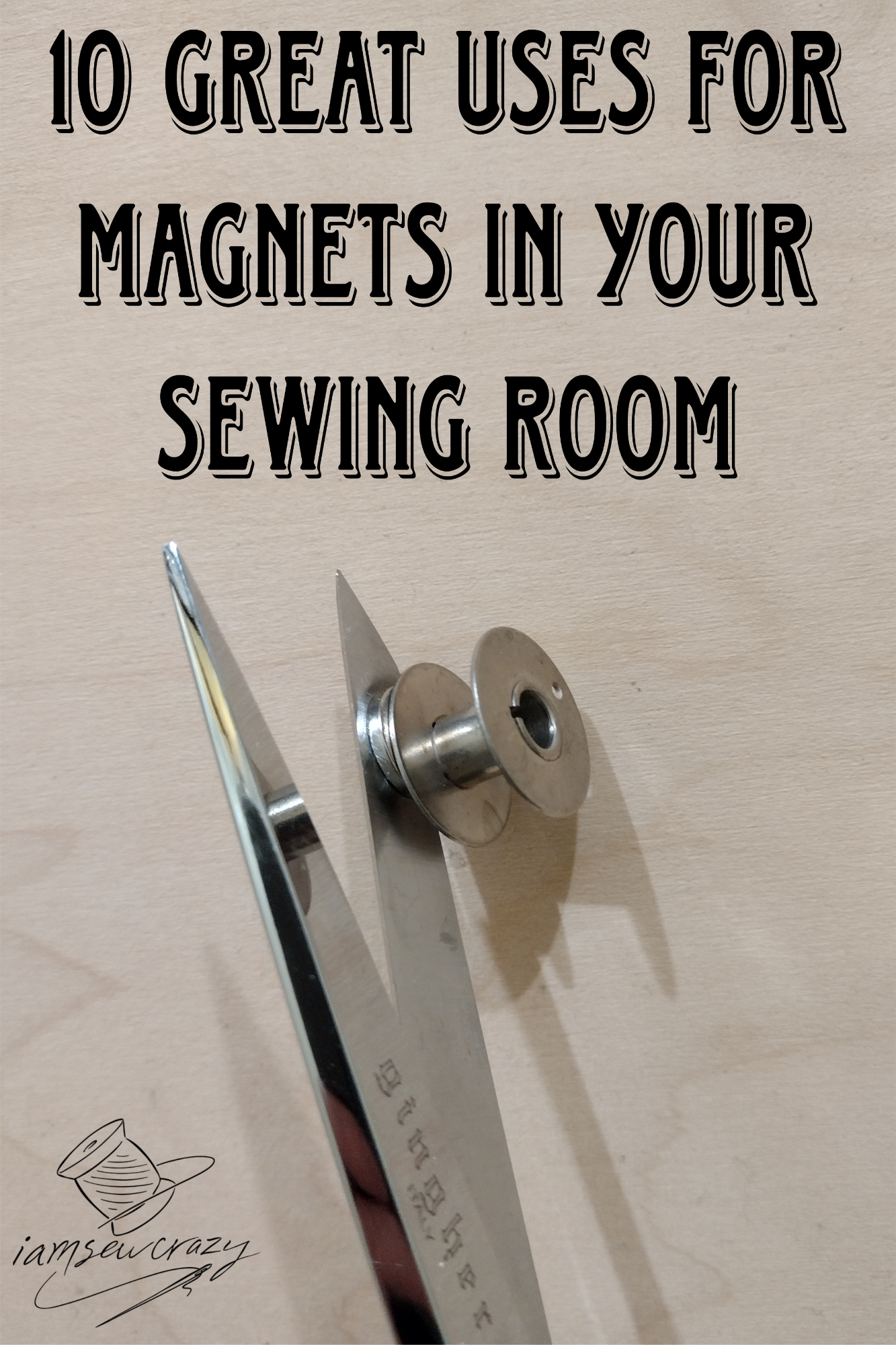
I use neodymium magnets quite a bit in my craft room, so I always have some on hand. In addition to the hacks I already mentioned (an easy way to add seam allowances to a sewing pattern, and how to cut even strips of fabric), here are some other uses for magnets in your craft room:
- They are an integral part of my favorite DIY magnetic pincushion. The bolt makes the pins stick out at an angle, so they’re always easy to grab.
- I use them to hang up my jewelry pliers and other tools. It keeps my work surface tidy, but everything is accessible when I need it.
- I’m constantly using 2 of them to “pin” fabric or material that is particularly susceptible to pin holes or pulls. Delicate fabric, vinyl, leather, etc can all benefit from pin-less pinning!
- I love using magnets as a third hand, to hold things down on a metal table. It’s almost like a lightweight clamp that can hang on to the other end of something you’re braiding or tying.
- Neodymium magnets are an easy way to keep track of half-used sewing machine needles. Just have a tiny magnet labelled for each type of needle you use. For example, ballpoint 11, sharp 14, etc. You’ll be able to keep track of which needle is which when they’re not installed in your machine.
- You can store metal bobbins on your wall using magnets. I currently use a DIY garden hose bobbin holder that I came up with. But I’m thinking of switching things up with magnets!
- Use them to add a custom seam guide to the throat plate of your sewing machine. Just stick any metal object with a straight edge to the right of your needle using magnets. You can easily change the width of the seam guide when you change projects.
- Magnetic purse clasps are a really easy closure option for DIY tote bags and purses. They’re easier to install than zippers, and easier to close than snaps or buttons.
- You can use neodymium magnets on the side of a filing cabinet or a magnetic whiteboard to create a design wall. Pin up fabric swatches, inspiration pictures, articles, sketches, or other ideas.
- They also make the best bases for DIY refrigerator magnets. A custom fridge magnet makes such a great gift!
Important notes about using magnets in your sewing projects:

30 Sets of Magnetic Snap Fasteners for Sewing
- Package Includes: You will receive 30 sets of magnetic snap buttons, with a delicate and elegant plum blossom design; Sufficient quantity to meet your various needs.
- Quality Material: Made of quality carbide material, it is lightweight and reliable. The surface is finely electroplated, waterproof and not easy to fade. Can be used for a long time.
New starting from: 8.99 $
Go to Amazon- If you are sewing magnets INTO a project, like you would for a purse clasp, then use coated magnets that are designed to be used as clasps. Utility magnets can rust if they are sewn into fabric and used as closures.
- Be careful using magnets too close to computerized sewing machines and other electronics. A strong magnetic field can interfere with screens and electronic parts.
- Keep all magnets away from children who could swallow them.
- Neodymium magnets are quite strong, which makes them super dependable for various projects. However, larger magnets can click together with some force. So make sure that you aren’t getting your fingers or anything else pinched in between.
Now you know an easy way to add seam allowances to a sewing pattern, and a few other sewing hacks involving magnets. Go make something awesome!
Happy sewing!
Jessie
